While a lot of the Witchery chatter so far this year has been about an extra Witcher 3 DLC rumoured to be in the works, one of the projects we know for sure CD Projekt have on the go is a remake of the first Witcher game. Ahead of the remake’s arrival, a key dev on the 2007 RPG has just finished a developer commentary run through it, which makes for a great way to pass some time between Witchery things.
This is a seven-game compilation title, collecting together a handful of the Nickelodeon duo’s SNES and Game Boy adventures. The titles included in this one are The Ren and Stimpy Show: Space Cadet Adventures (Game Boy), Veediots! (SNES and Game Boy), Buckeroo$! (NES and SNES), Time Warp (SNES) and Fire Dogs (SNES) — yes, that does mean Quest for the Shaven Yak and Stimpy’s Invention are missing, unfortunately.
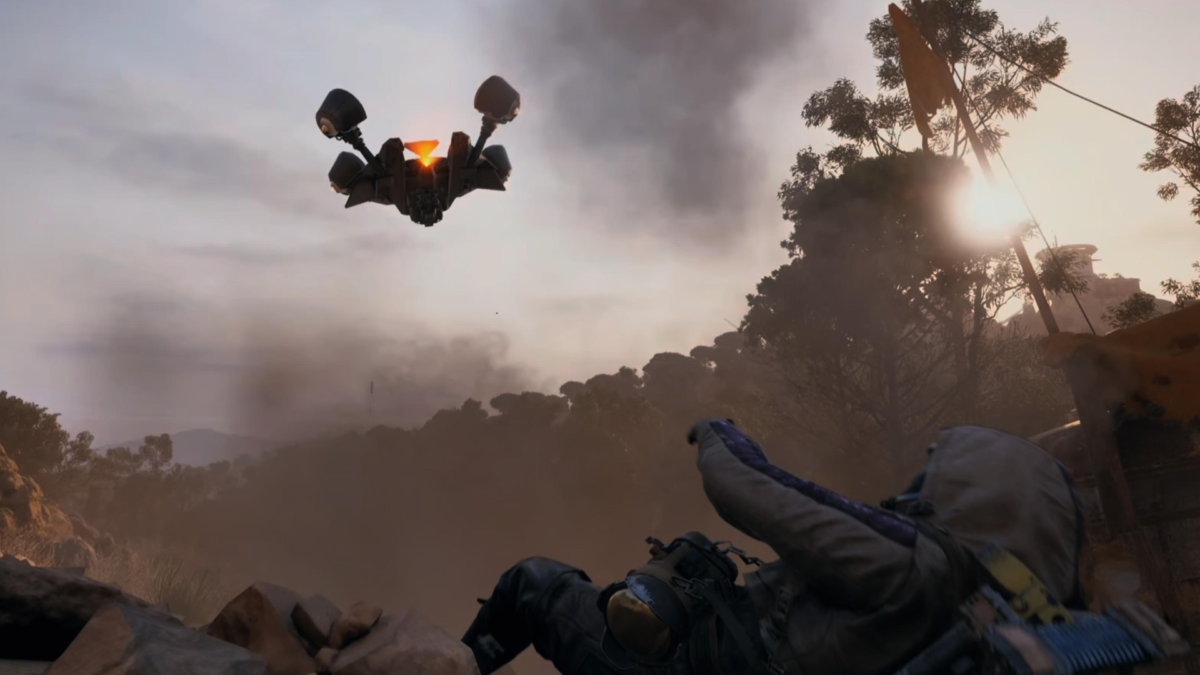
We already knew that Activision had decided to walk away from Warzone Mobile — the publisher admitted last May that it “unfortunately has not met [Activision’s] expectations” — but now we have a specific date as to when the smartphone battle royale will be taken offline.
In a brief statement posted to its official website, the team thanked players for their “dedication and passion,” and said “as a final step in the previously communicated service changes to Call of Duty: Warzone Mobile, the servers for Call of Duty: Warzone Mobile will go offline on April 17, 2026, after which the game will no longer be available for play.”
Up until that time, players can still play and “engage with existing content,” but refunds are not available for any unused COD Points or previously purchased in-game content, so you’re advised to use them up before the game shutdowns in April.
Mobile fans are encouraged to migrate to the free-to-play Call of Duty: Mobile — a different game, albeit with a confusingly similar title — “which offers franchise-favorite game modes, including Battle Royale, Multiplayer, and Zombies, as well as the new extraction-based DMZ: Recon.
“The standalone Call of Duty: Mobile delivers frequent seasonal content updates that include Ranked Play, Events, and the tier-based Battle Pass rewards system offering,” the team explained. “Call of Duty: Mobile is available to download through Google Play and Apple’s App Store. Additionally, Call of Duty: Warzone is available on PC and console and is also free to play.”
Warzone Mobile launched in March 2024 on iOS and Android as a Warzone-specific Call of Duty mobile experience that offered battle royale for up to 120 players, with cross-progression to the PC and console versions of Warzone, Modern Warfare 2 and 3, and, later in the year, Black Ops 6. It struggled right out of the gate, though, and failed to make a mark with “mobile-first players like it has with PC and console audiences,” leading to Activision’s decision to cull it just a little over a year later.
IGN’s Call of Duty Warzone Mobile review returned an 8/10. We said: “Call of Duty: Warzone Mobile includes all the best elements of Warzone, while speeding up and streamlining matches and using cross-progression to make this a meaningful extension of the traditional experience.”
Vikki Blake is a reporter for IGN, as well as a critic, columnist, and consultant with 15+ years experience working with some of the world’s biggest gaming sites and publications. She’s also a Guardian, Spartan, Silent Hillian, Legend, and perpetually High Chaos. Find her at BlueSky.
It’s been almost a year since Assassin’s Creed Shadows released, and Ubisoft is not done updating its feudal Japan-set stabathon. This month brings the addition of a manual jump option, alongside two other fan-requested changes.
As part of the 1.1.8 update going live today, February 17, Ubisoft will add a manual jump option to the game (if you’ve toggled on your Advanced Parkour setting), which returns from previous titles in the series.
Two other small additions are also set to become available: a detailed stat page so you can analyze your build in granular detail, and some visual improvements to when you make a critical hit. All of these changes had been requested by fans, so are likely to be positively received.
That said, this is a pretty small set of additions that look like the game’s only major update across the first three months of this year. Update 1.1.7 launched back in December, capping off a first nine months of post-release additions that had arrived pretty much every month.
Today’s update to Assassin’s Creed Shadows is the first notable addition to the game of 2026, and according to a Winter Roadmap released by Ubisoft looks to be the only one coming ahead of the game’s March 20 anniversary, which the company will celebrate with a livestream and giveaways. Here’s hoping we hear more of what’s coming to the game in its second year then.
The only other item of note before then is the Switch 2 launch of the game’s Claws of Awaji expansion, which caps off the game’s main narrative and now looks to be the only major expansion the game will get. It’s hard not to compare the level of support for Shadows with that for the series’ previous game Valhalla, which received three major expansions, an Odyssey crossover DLC, an epilogue DLC and several major new modes, and feel like Shadows has been underserved in comparison.
As feared, the recent uptick in Steam Decks being noted as out of stock is down to the ongoing memory crisis. RAM prices have been driven through the roof by AI companies gobbling up memory sticks en-masse, with the other downside of that being the tech’s very scarce at the moment. Cue companies like Valve stuggling to keep on securing as much as they need to make and sell hardware without interruption.
Nintendo’s Legend of Zelda series celebrates its 40th anniversary this year, and it appears First 4 Figures will be joining in on the fun.
In a new announcement this week, the statue maker has given its followers on social media and YouTube a “sneak peek” of a new Tears of the Kingdom – Link statue. If it looks familiar, it’s because the standard edition is already available at “GameStop and other major retailers”.
Yes, in case you missed this news, it starts this week from 18th February 2026 and will run until 23rd February 2026. To join the fight, you’ll need to an active Switch Online membership. There’s also support for “arcade stick-type” controllers, which have been officially licensed by Nintendo.
If you’re looking for another arcade racing game to try out on Nintendo’s new hybrid system, Gameloft has this week released a Switch 2 Edition of its free-to-play racer Asphalt Legends.
Assassin’s Creed Shadows arrived as an almost complete package on Switch 2 at the end of last year. The only content missing from this portable version was the Claws of Awaji expansion — which had landed on other systems back in September — for which Ubisoft provided a vague ‘coming later in 2026’ release window. Well, the big Ubi has today been a bit more specific.
As revealed in the new Shadows Winter Roadmap, the expansion will launch on Switch 2 on 10th March. This paid DLC includes a whole new area to explore and storyline to follow, as Naoe and Yasuke head to the island of Awaji to track down a lost treasure. There are also new weapons and skins to unlock in the DLC, all of which can be carried back over to the main game to use as you please.
When we first started working on Death Howl, if you had told me we were building an “open world, soulslike deckbuilder,” I would have looked at you with a fair bit of confusion. It sounds like a recipe made out of components that don’t naturally fit together. Yet, as we prepare to bring the journey of Ro to a new audience on PlayStation 5 from February 19, I’ve been reflecting on how this genre blend came to be.
The truth is, the “soulslike” tag wasn’t part of the original design document.
A foundation of cards and tactics
At its core, Death Howl began as a prototype that I made as a school project back in 2015 after playing the unique and brilliant game called Dream Quest. I’ve always been inspired by Magic: The Gathering and the idea of traversing a world to collect materials for crafting power. Our initial goal was to create an alternative to the traditional roguelite deckbuilder – something that traded linear, “always-start-from-beginning” runs for a free-roaming open world.
We also looked at the character skill building where cards replaced traditional weapons and spells, with all combat taking place on a grid.
The accidental Soulslike
In general, we never intended to blend so many genres. At its core, Death Howl is an open world deckbuilder. But to achieve that vision, many different designs had to merge. We combined tactical, grid-based combat with deck building. We merged open world exploration with turn-based battles. And as the design evolved, other genre elements emerged organically – including soulslike mechanics.
Honestly, I wasn’t even especially familiar with soulslike games when we started. It was something that came about from testers telling us it felt like one.
Some elements were already in place. “Sacred Groves” – checkpoint locations much like the bonfires you might know from other games-allow you to heal, but they also respawn all enemies. We had designed these early on. But testers pointed to other traces of the genre in our game.
They felt Death Howl earned the soulslike label because of how it rewards pattern recognition. You need to observe enemy behaviors – learning to avoid the frontal charge of a boar, for instance – and embrace the punishing but fair loop of death and adaptation.
We made one key adjustment to fit our card-based structure. Instead of sending players back to the last checkpoint, dying in Death Howl returns you to the moment just before the encounter you lost. When Ro dies, she drops “Death Howls” – the currency earned from defeating enemies, used to craft new cards and upgrade abilities. These can be retrieved after respawning, much like souls in other games. This mechanic was perhaps the biggest direct inspiration we took from the genre once we became more familiar with it.
The rest emerged more indirectly. But embracing the soulslike direction as an overall concept helped us add even more layers to the experience.
For me, it’s still an open world deckbuilder. For others, it’s a soulslike card battler. Both are true.
Balancing the dark and the ethereal
Genre-blending is one part of Death Howl’s identity. The other is its mood.
The world of Death Howl is a spirit realm born from grief, distant memories, and the unknown. To capture that otherworldly feeling, we leaned into a “linocut” or woodcut art style-inspired by heavy metal t-shirts and old-school Scandinavian illustrations – all rendered in minimalistic pixel art.
This visual approach mirrors the gameplay in a way. Just as shapes emerge from deep shadows in our art, players must piece together the narrative of Ro’s quest to reunite with her son. The pixel art forces the viewer to imagine the details left in the darkness, creating space for their own interpretation.
A journey to PlayStation
Building Death Howl taught us that creating something unique often means combining elements that don’t obviously fit together. The result is a game that balances the calm of exploration with the intensity of turn-based combat, all wrapped in a story of resilience and loss.
As we bring this experience to PlayStation 5 on February 19, we’re incredibly excited for a new community to step into our Spirit World and discover its secrets. Whether you’re a deckbuilding veteran or a soulslike fan looking for a tactical twist, we hope you’ll find something here that resonates.
Death Howl is more than the sum of its genres-it’s a reflection of the creative journey that shaped it.